
TL;DR
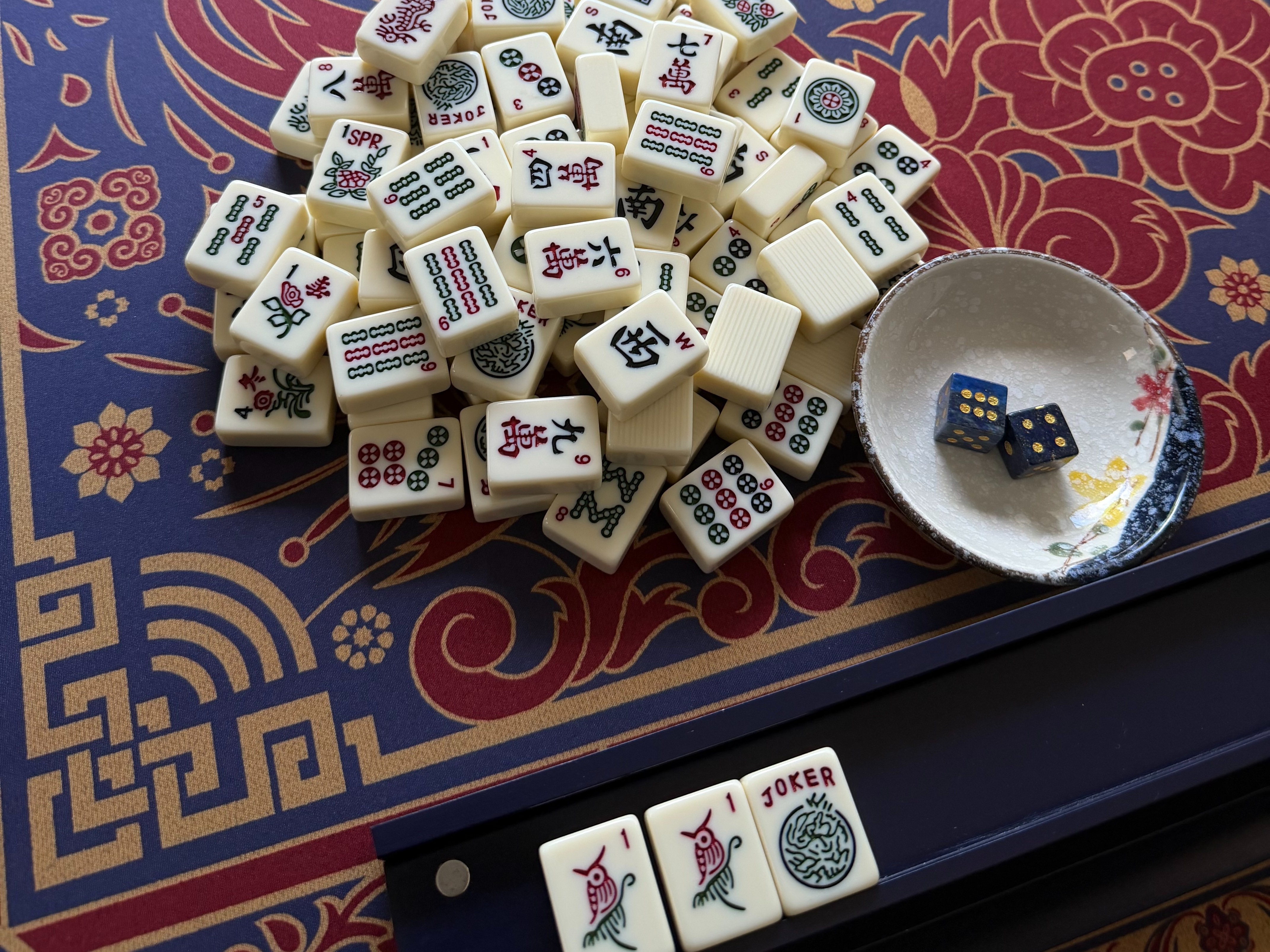
To play American Mahjong, you need a playing card, tiles, a mat and racks.
Be aware of affiliate codes, pre orders, AI photos, and counterfeit tiles.
Ensure that the tiles are readable and have good contrast. Lack of either can lead to a frustrating experience.
You can get a set at any price point. Only buy sets that you are absolutely in love with. Otherwise you'll have a bunch of sets that just sit on your shelf.
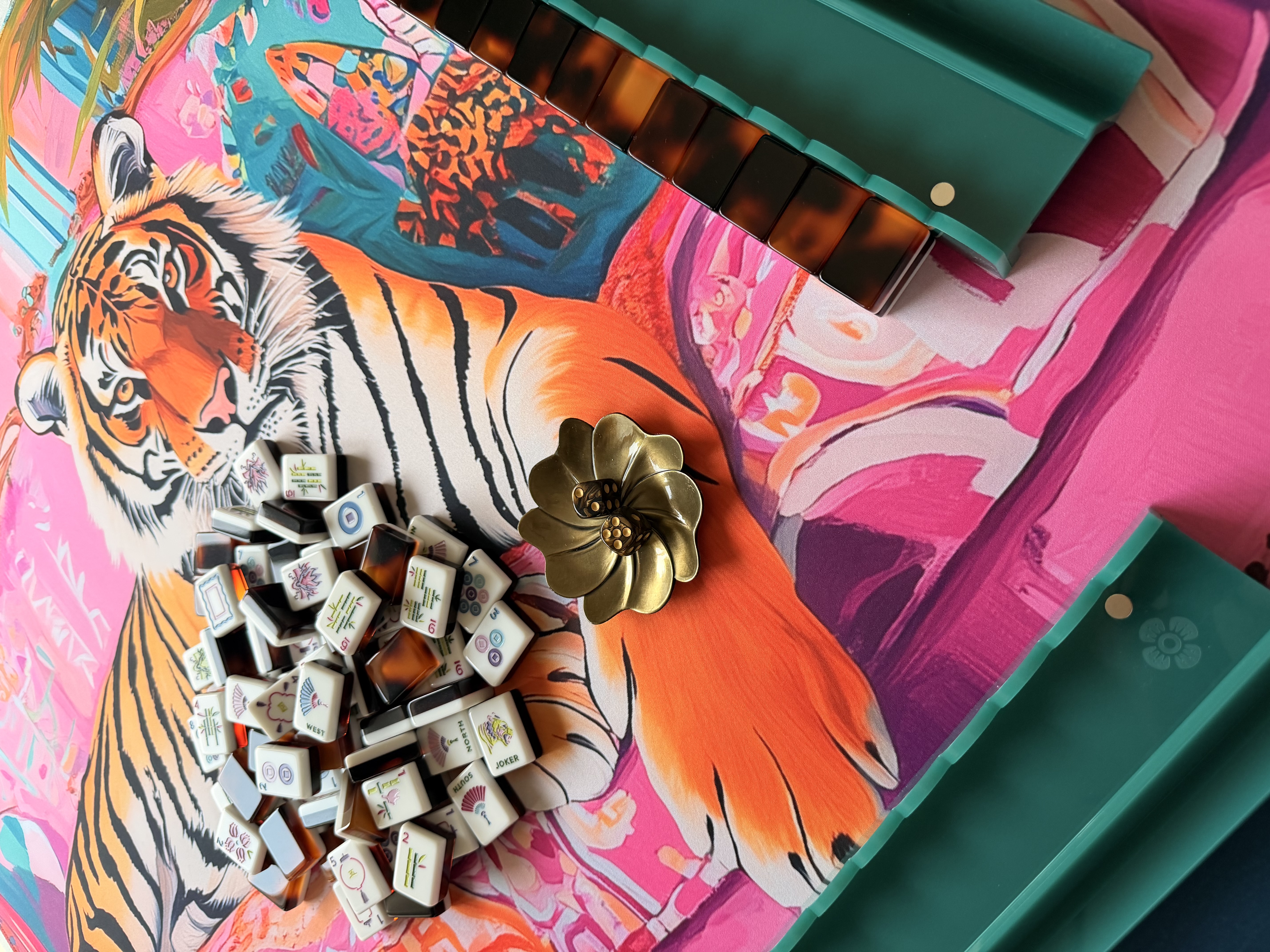
When I first learned mahjong (2 short years ago), there were a handful of American companies making mahjong tiles. This made the first tile set decision pretty easy. I familiarized myself with the five or so companies and determined:
How much did I want to spend?
Did I want single or multi-layered tiles?
Did I prefer a traditional or novelty design?
And then I loaded my cart and clicked purchase. As my parents say, it was much easier in those days. Well, those days are gone! In the past year, the mahjong tile market has EXPLODED with sets. So now, I often get the question from those new to the game, “I’m ready for my first set, where do I start”? Well, hopefully this can help kick-off your search.
A couple of notes about the mahjong market in general:
Affiliates & Codes: A lot of mahjong companies use affiliate relationships as a form of marketing. You will see a number of social creators, including myself, sharing coupon codes to save a certain amount when you purchase the products. When you use the code, the affiliate (most likely) gets a commission off of the sale. Find creators that you trust to show you products they love to use, regardless of affiliations or commissions. I purchase products before I become an affiliate and if I love those products, then I will go through the process of connecting with the company. But, I also have companies that I share with you just because of love their products. Fo you as a consumer, always check before buying to see if there is an affiliate code out there for whatever company you're purchasing from. Sometimes the savings can be substantial. My IG will have updated companies I am affiliated with and my code is almost always OME10.
Preorders vs In Stock Orders - This is a hot button topic in the mahjong market right now. Many companies are listing their products under a pre-order model where you pay 100% today but get the tiles or the mats 1-6 months later. Under this model, the company can predetermine demand and order enough for everyone. Some like this model because they feel like they can reserve their set and not have to battle to get a set that drops with a limited quantity. But, under this model, the consumer is stuck paying for a product they won't get for months. What happens if the company goes under will waiting for the tiles? What happens if the boat sinks on the way? These are real risks that the consumer bares in this scenario. These risks are higher for brand new, unproven companies. Be aware when you purchase a set of tiles when the they are expected to ship. Also, make sure you are comfortable with the risks before purchasing a pre-order.
AI vs Real Photos - We are also seeing a number of companies listing their tiles BEFORE they have a demo set in hand. The tiles shown in the company's marketing are all AI generated. I HIGHLY recommend staying away from sets like this. Until the company can get their hands on an actual set do not buy. This is the easiest way to get scammed.
Counterfeit Tiles - Be very cautious when buying tiles from any place other than the actual brand or a mahjong boutique store. We are seeing stolen tiles designs being sold on platforms like Alibaba, Temu, and Amazon. In general, mahjong brands are small, family owned companies. The counterfeit tiles do financial and reputational damage to the small companies that have put money and time into creating these designs. I understand these dupes may cost less, but they are so detrimental to the mahjong community as a whole. I beg you to rethink the purchase of these counterfeit tiles.
What do you really need?
To play American Mahjong you need 4 things:
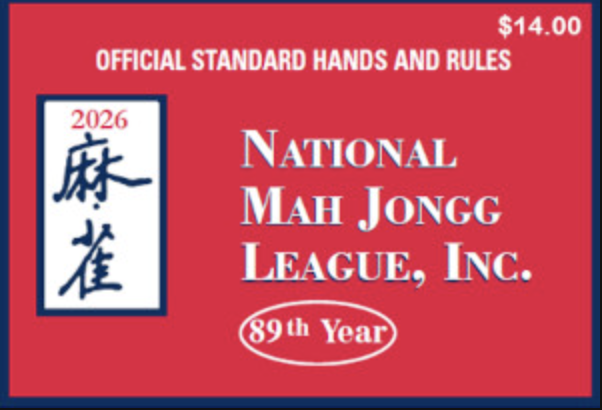
Playing Card(s) - As I noted in my last post, the playing card is the first thing you should get when you learn the game. The card is only used in American Mahjong and it shows the various hands that can be used to win. It is important to pay attention to what card year you are buying. The cards update each year. The flip to the new year happens around late March - early April. So if you’re learning in March, you may want to wait until the new card comes out. If you are planning on hosting, it is good to buy the cards in sets of four so that you can accommodate people who don’t have cards or forget theirs.
The cards can be purchased directly from the National Mah Jongg League (NMJL), your local mahjong store, or your local JCC. Beware of purchasing cards on Amazon. While the NMJL has an Amazon Storefront, there are a number of counterfeit cards out there. The number one red flag is, if you are buying for less than $14 (standard-size card) or $15 (large-size card), then it is likely counterfeit. Additionally, Mahj For All produces a NMJL compatible mahjong card for those that are colorblind.
There are multiple companies coming out with their own cards, but the authoritative and most widely used card is the NMJL card. In reality, you can play with any card, from any company, from any year, it is just important that everyone at the table is playing with the same card.
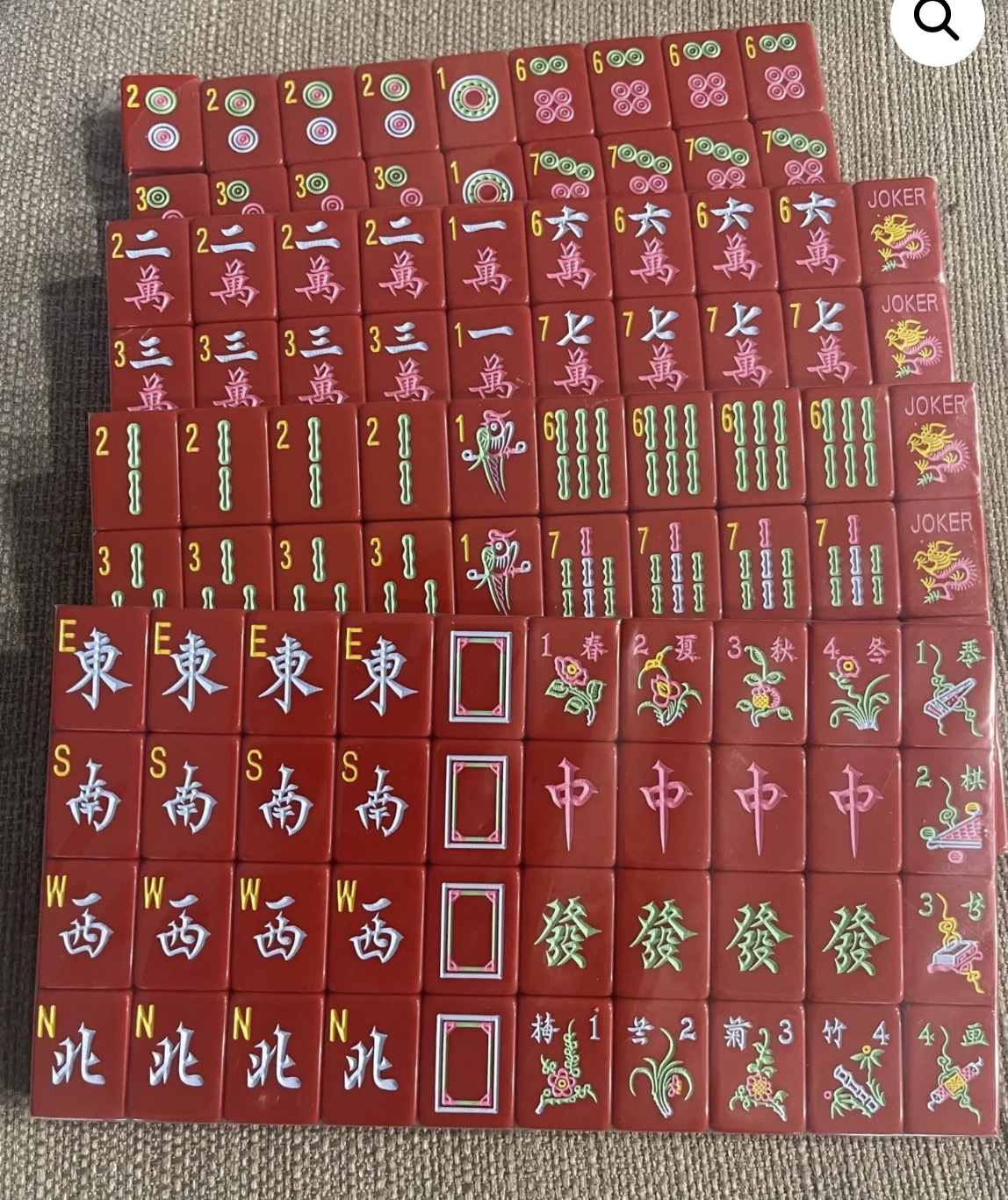
Tiles - If you are playing American Mahjong, you want to be sure that you are buying an American Mahjong set. Chinese Mahjong sets generally come with 144-146 tiles, because jokers are not used. American Mahjong sets typically come with anywhere from 152 -160 tiles. Some sets include extra jokers and blanks. Blanks are typically used to replace a tile if one is lost or stolen. However, especially down here in Texas, blanks and extra jokers have been incorporated into gameplay with various house rules.
Some American Mahjong tile sets come with numbered flowers, season tiles, or capture tiles. Capture tiles are not used in American Mahjong. Numbered flowers and seasons are important to Chinese mahjong variants. For American mahjong, these are just normal flowers. Pick which ones you like the best. Just make sure that you are only playing with 8 flowers total. Tip: Having a set with numbered flowers makes your set more versatile should you want to learn another variant in the future. So while it is not necessary, it may be something that you want to look for.
Hand painted set from Mah Jongg Maven. Note the numbered flowers.
Tiles can come UV printed (not engraved) or engraved. Flat UV printed tiles can be awesome because you can get details like a painting or picture on a tile. Kimberly Roberts Studio does some BEAUTIFULLY UV printed tiles with some of her artwork. There is some debate that these tiles do not have the longevity of engraved tiles, but I believe that is still to be seen.
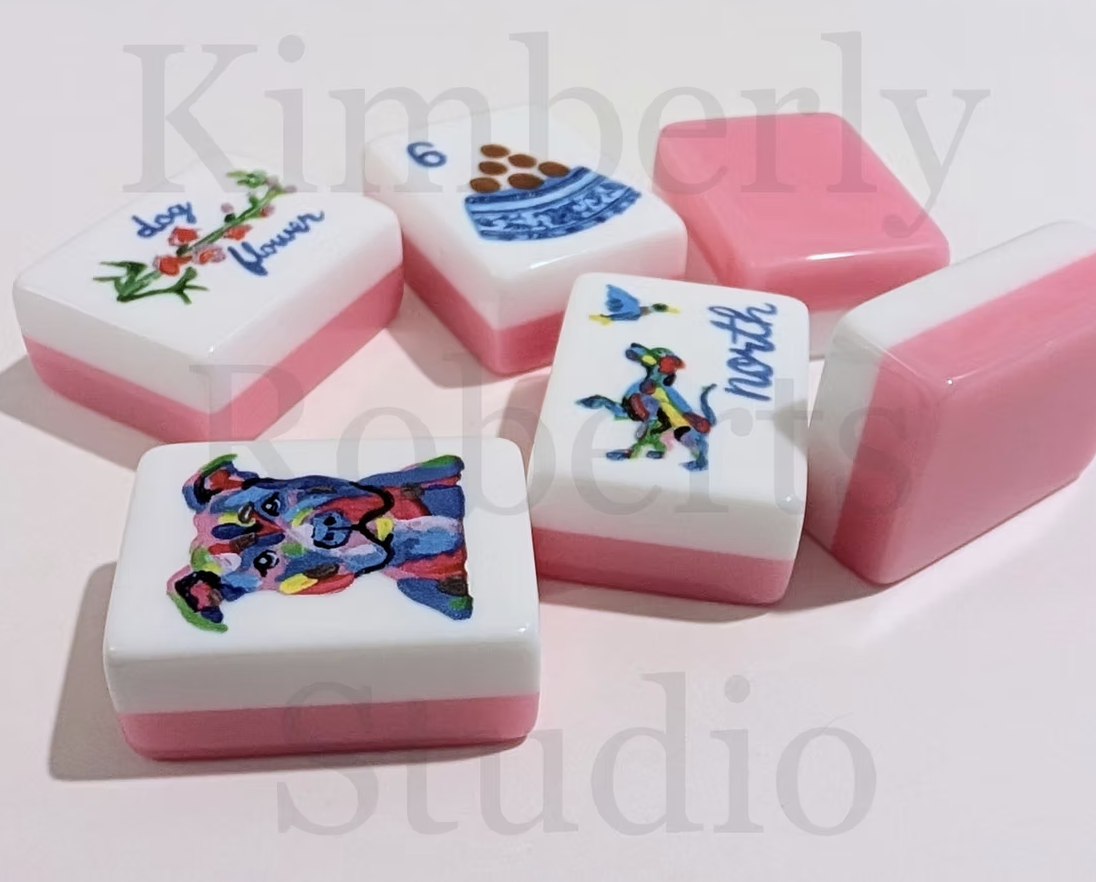
UV printed tiles from Kimberly Roberts studio
Engraved tiles can be hand etched or machine etched. Most mass produced tiles are machine etched. The etching in the tiles are then either hand painted or UV painted. Hand vs UV painting is personal preference and people have opinions. Hand painting is lovely and personal, but you don’t get as many color variations or fine lines as you can in UV Painting. UV painting allows for very detailed artwork to be painted with multiple colors. Merit Mahjong’s artist line is a perfect example. They released a UV painted set and a hand painted set. The differences between the two are noticeable, but depending on what is important to you, both sets are incredible.
Finally, tiles most often come in two sizes. The first are short and fat tiles like Bam Bird Boutique’s. These are typically ~1.25”x1”x0.6”. Then there are tall skinny tiles like The Mahjong Line. These are typically ~1.44”x”0.9x0.4”. There are slight differences within these groupings. Obviously, the number of layers impacts the depth of a tile. And slight variances in height between different lines can be noticeable during game play. For instance, Sunday Mahjong tiles are definitely tall and skinny, but they are noticeably taller than a The Mahjong Line tile. If you have a rack with a short slanted back, the tiles may slip off. The main thing with sizing is, what feels best in your hand? What do you enjoy playing with? What racks do you have? And how do you like to store your sets.
Mats - The mat helps protect the tiles and mute some of the sound of the tiles hitting the table. Mats range from simple inexpensive gaming neoprene mat to high-end vegan leatherette mat. Neoprene mats are the most common but the market for other types are growing. Neoprene mats are great because you can throw them in the washing machine if they get dirty. Other material options that are easy to clean are the low-pile chenille mats (machine washable) and vegan leatherette (wipes off).
You may also see a number of non-neoprene mats on the market that have the texture of a velvet/suede mix. A lot of businesses, like Britt Mills Design, are moving away from these mats likely because they are not as easy to clean and some feel tiles do not slide as easily. They are still beautiful and fun to play on; just be aware that they are not machine washable.
Mats typically come in a 22” square for travel size and either 31” or 33” squares for full-size. The thickness of the mats generally range from 2mm to 3mm. A lot of people have very strong preference towards the thickness of mats. There is a general feeling that thicker mats are more luxurious. I think thin mats can also be luxurious and if you are worried about space or weight, 2mm mats are wonderful! For me, I care about the quality of the print over size or thickness because once the table is set, that is what people see.
In general, mats are a very powerful tool in the tablescape book given they are a lower cost way to create many different looks with the same set of tiles. This is a great place to go a little crazy.
Racks - You’ll most often see wooden or acrylic racks with pushers that are connected by either a hinge or by magnets. The decision between each of these options is purely preference. Wooden racks tend to be less expensive than acrylic but the paint can chip. Acrylic comes in an array of colors and can be shiny and rich in color, but there is the possibility of it shattering if they are dropping or hit against something when carrying them. Hinge vs magnet is a debate that I often see. Both work great, so there is no right or wrong. With a hinged rack, you will never wonder which way the wall goes out. My preference is magnet because the entire pusher can detach from the rack and be used to move the wall wherever you need it to go. Both are great, just comes down to what you like.
Full-size racks typically come in 19” or 20” lengths. If you play with short fatter tiles (think Oh My Mahjong or Bam Bird Boutique), you are likely fine with a 19” rack. If you play with the tall wider tiles (Mahjong Line, Bespoke Mahjong, Woodlands Mahjong), you are going to want 20” racks. This is important because when it is time to push your wall, ideally, your pusher covers the length of the wall. Are you able to play with 19” inch racks and Bespoke tiles? Absolutely, but having the right size does add just a touch of ease during gameplay. For this reason, many just stick to 20” racks for versatility.
What are various tiles made out of?
Over the years, tiles have been made out of various materials including bone and bamboo, ivory, and various plastics like bakelite, (and most recently) resin, melamine, and acrylic. Each material has its pros and cons. Melamine and acrylic are the two most common types of materials used for mahjong, with acrylic being the most used today.
Acrylic - If you have a set that is shiny, multilayered, or light weight, these are most likely going to be acrylic tiles. They allow for versatility but they can scratch easier.
Melamine - Melamine, on the other hand, will always be single-layered, matte, and heavier. This is a great tile for longevity because it is much harder to scratch, but you won’t get all of the different looks you see with acrylic.
My Fair Mahjong (Destination Series), Yellow Mountain Imports, and Gammon Village are a few of the companies most notably known for using melamine. Most other companies creating American mahjong tiles are using acrylic and a few are starting to use resin. If you want to learn more about this and how the tiles are constructed, Angela with Mahjong My Take has done an extensive dive into the different materials and their pros and cons on her IG page.
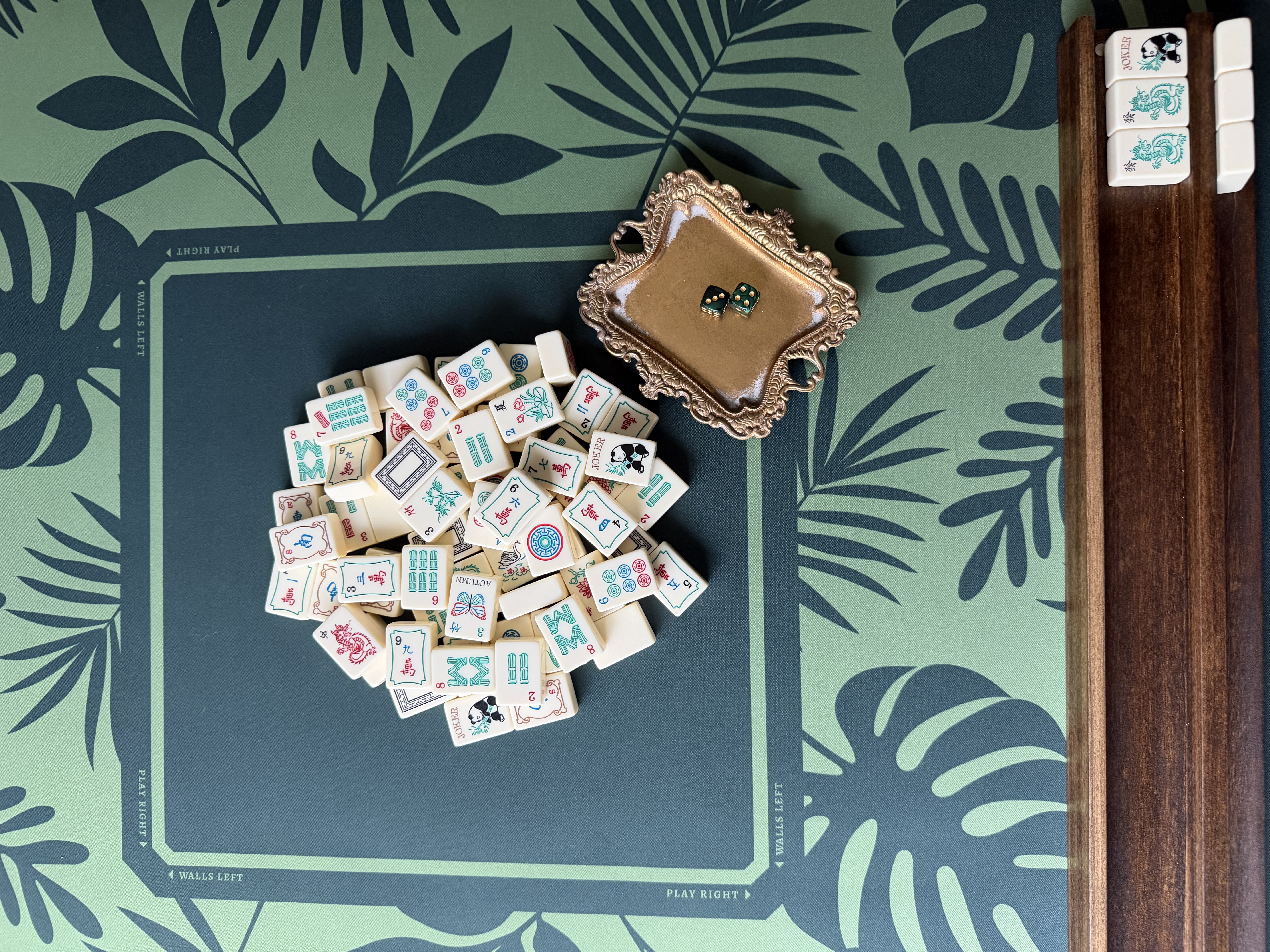
Linda Li Butterfly Melamine Tiles from Gammon Village
Budget
This is the most important step in the tile selection process. There are so many tiles out there in so many different price ranges. You can find a set you love at most price points. I like to think of sets in three groupings:
Economical Tiles - Range from $20 to $200. There are actually many that fall into this price range. Some of the most highly sought after at the Hobby Lobby tiles that run about $20. Yellow Mountain Imports and Mahjongg Maven have some beautiful traditional tiles that you can get in the price range. Companies like Soap Tile Studios, Call For Mahjong, and Virora (sold on Amazon) pride themselves on offering a great quality tile at reasonable prices. They definitely deliver on this promise.
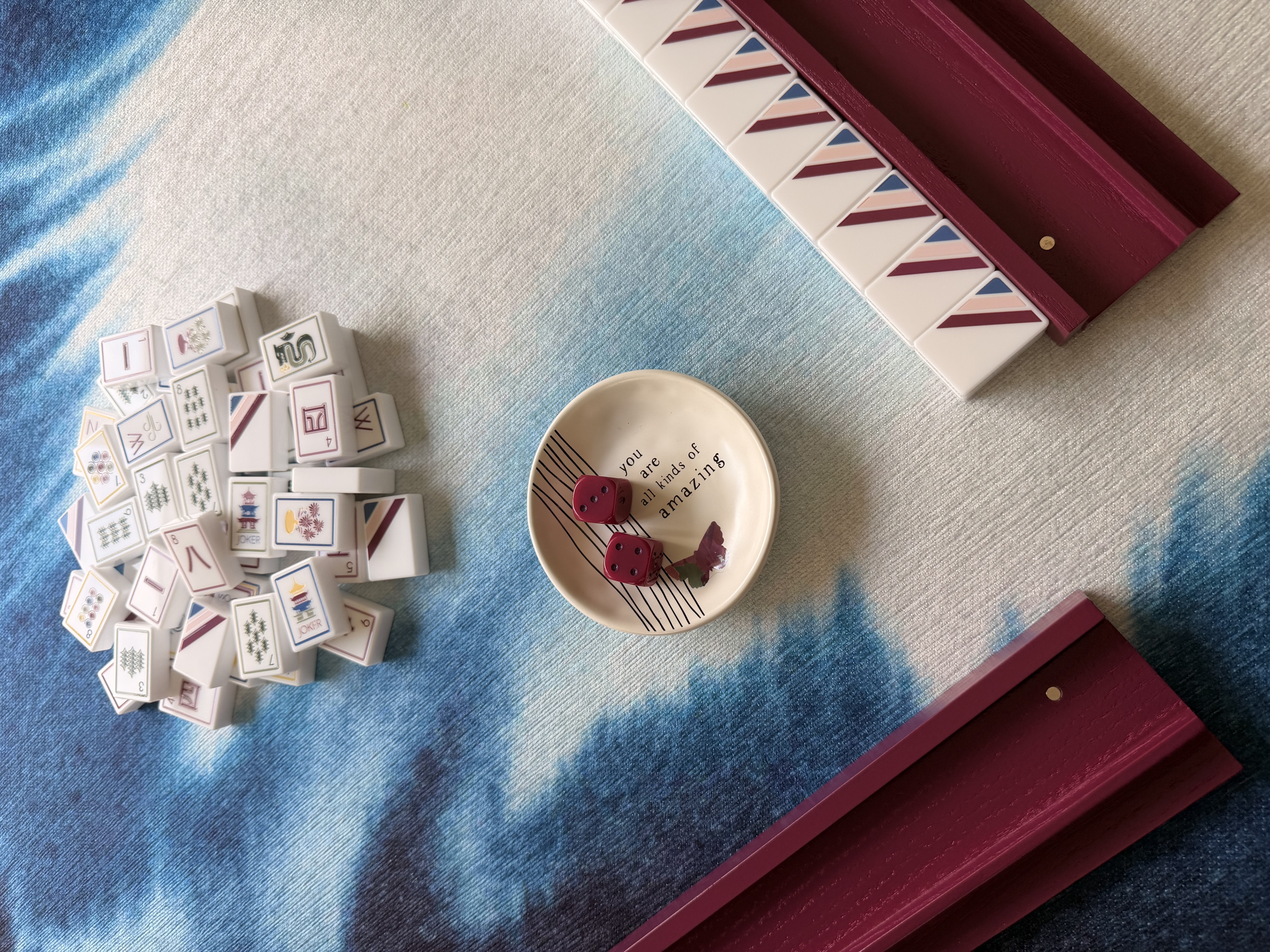
Soap Tile Studio, The Standard; Retail $180
Mid-Range Tiles - $200 to $450. I would say that the average price of tiles falls into this category, although we are seeing prices continue to creep up. There are so many options in this category. Some (not all) of my favorites in this category are Woodlands Mahjong Society, Bam Bird Boutique (my second set), Peace Love Mahjong (my first set), My Fair Mahjong, Miss Mahjong, The Mahjong Line, Bespoke Mahjong, Brooklyn Mahjong, and Two Sparrows. The tiles are beautifully designed, engraved, and hand painted. This category is proof that you don’t have to spend $500 to get a wonderful set of tiles.
“Luxury” Range - $450+ I intentionally put quotes around luxury because not all tiles above $400 are equal. Some, I feel, are priced in this range because a lot of others are able to command that price. And as the market expands faster than brands are able to get tiles on hand, the price goes up, even if quality is not on par. Now, there are some companies that are worth this premium. And there are some companies that don’t charge the premium, that I think should. I believe, Sunday Mahjong, Mahj Tile Haus, Ozark Mahjongg, Modern Mahjong, and Maison Mahj all can command the price that they charge. Incredible artwork, beautiful packaging, high quality acrylic, and an insane market demand make these tiles worth every single penny.
One of the most notable luxury tile makers is Crisloid out of Rhode Island. They have been making gaming products including tiles since the 1940’s. They use resin to construct their tiles and every tile is made in house in the US and hand painted. Given the handmade nature of the tiles, it is hard to get your hands on a set and if you are, a set can cost anywhere from $900 to $2,500, if purchased directly from the company. If your budget allows you to add one of these to your collection, I highly recommend snagging them.
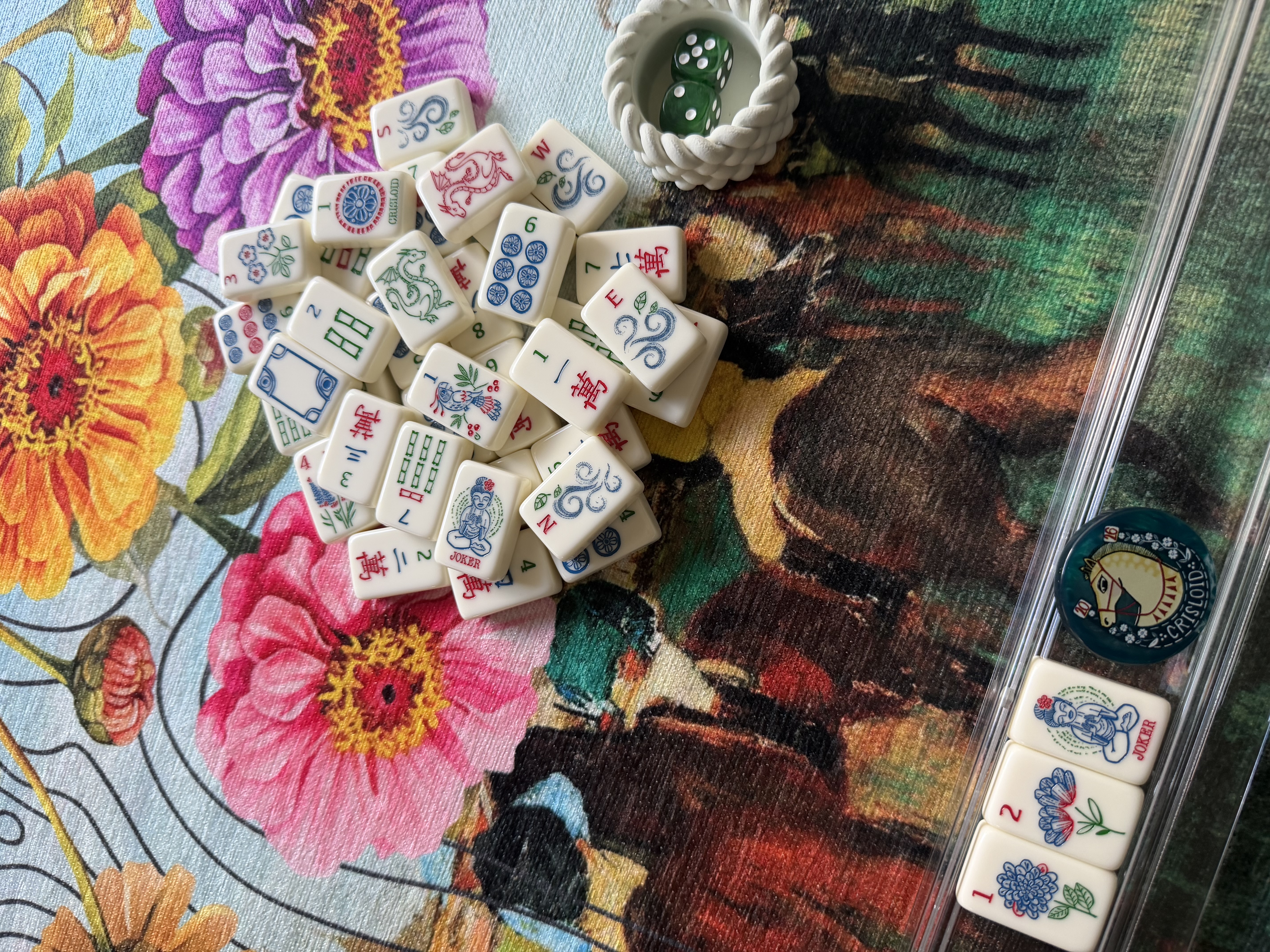
Crisloid Florence 9 Tiles; Retail $900
Other Things to Look Out For
Readability – Most tiles come with a key card that tells you what each tile is. Ideally, you can pick up a tile set and play it without having to consult the card. This tells you that you are playing with a very readable set. Sets that stray too far from the traditional tile design can lead to miscalls, unintended tile discards, and faux-mahjs. All have happened to me personally. Tiles don’t have to be traditional, but you need to be able to tell a crak from a dot when you look at it. Always keep this in mind when looking for a set.
Color Contrast and Number Size - You need to be able to see what a tile is from across the table. If the color of the tiles and numbers are very close or the numbers are itty bitty, you will have a hard time seeing what exposures are happening, what tile someone dropped, or reading the discard pile. Also, you may end up playing in low light settings (think bar or lounge) and if the tiles and numbers are dark, it can make for a frustrating game experience. Make sure that you can clearly read what is on the tile.
Are you ready to get the forever tile? - If you are not ready to find the tile that is YOUR set, perhaps you purchase something in the economical range until you are ready. I have seen people purchase the $20 tiles from Hobby Lobby and really love them. To play, you do not need the $600 set your neighbor brought over last night. In the beginning, it’s all about practice. And if it’s a $20 set that gets you the practice, that is what you should get!
Do you love it? - Over the past couple of years, many of you know that I have bought a number of sets. Over time I have learned that spending a lot of money on a tile set that is not something you truly love, must have, and cannot live without, is not worth it. When you do this, you end up collecting a bunch of sets that never end up on a table. Be discerning in what you choose to spend your money on. There will always be a new “it” set. Make sure you LOVE the ones you buy for yourself. I’ve learned this the hard way.
Setting a Mahjong Table is one of my favorite things to do. The energetic pull of a set of tiles and the joy in finding the perfect mat is palpable. The art of picking the right accoutrement to top it off, racks, dice dishes, tile discard plates…it is a dopamine hit that can be hard to find. Be judicious in your purchases, buy what you love, and most importantly, enjoy the company that it brings because that is the point, right?